The Eiffel Tower, the soaring 330-meter wrought-iron centerpiece of Paris and one of the world's most recognizable cultural landmarks, has officially inaugurated an extensive modernization masterplan designed to enhance the visitor experience while protecting the monument's architectural integrity for future generations.
Streamlined Timed-Entry and Digitized Reservation Corridors
Under the newly revised ticketing operational framework announced by the Société d'Exploitation de la Tour Eiffel (SETE), over 80 percent of daily visitor access is now allocated through dynamic digital reservation windows. This shift virtually eliminates the multi-hour ticket queues that historically formed around the monument's four colossal stone pillars.
Visitors reserving summit elevator ascents can now select specific 15-minute arrival slots up to 60 days in advance. Dedicated express corridors have been established at the East and West security entrances, equipped with contactless mobile verification gates that expedite entry without compromising security protocols.
"Our mission is to ensure every visitor experiences the marvel of Gustave Eiffel's engineering without the friction of unpredictable queues," stated SETE Operations Director Jean-Luc Morel during the launch briefing. "By pairing intelligent time-slot management with expansive ground-level garden promenades, we are returning tranquility and majesty to the Champ de Mars."
Champ de Mars Ecological Restoration and Scenic Promenades
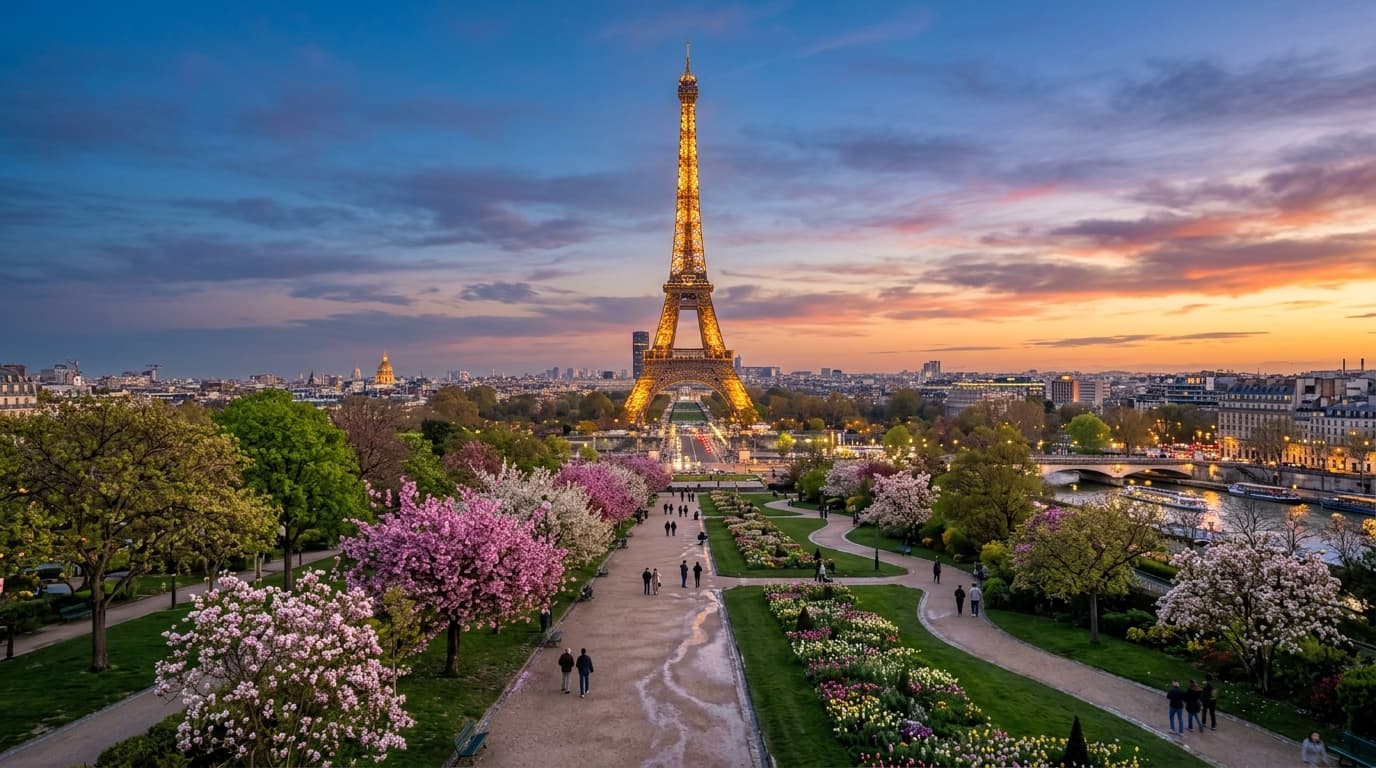
Complementing the vertical visitor upgrades is the completion of a multi-year ecological restoration across the surrounding 12 hectares of parkland. The historical tree-lined alleys flanking the monument have been replanted with indigenous European plane trees and flowering cherry blossom groves, creating a pedestrian-first sanctuary free of motorized traffic.
New educational heritage pavilions constructed from sustainable French timber and recycled glass have replaced temporary kiosks. These pavilions host interactive digital exhibits detailing the 1889 Universal Exposition, the physics behind Eiffel's wind-resistant lattice framework, and the intensive repainting campaigns required every seven years to protect against atmospheric corrosion.
Elevator Mechanical Overhauls and Night Illumination
Behind the scenes, engineers have finalized structural overhauls of the historic hydraulic elevators servicing the East and North pillars. Originally designed by hydraulic pioneer Léon Edoux, the modernized lifts combine historic brass aesthetics with state-of-the-art regenerative drive motors that return electrical power to the municipal grid during descents.
At twilight, the monument's celebrated golden illumination continues to dazzle spectators, illuminated by 20,000 low-energy LED strobe projectors. In alignment with Paris's citywide energy reduction targets, the sparkling light show runs for five minutes at the beginning of each hour after nightfall until 11:45 PM, offering an unforgettable visual spectacle from both the Champ de Mars and passing Seine river cruises.
Essential Visitor Intelligence & Booking Recommendations
Travelers planning an ascent during the high-demand summer and autumn months should keep the following verified guidance in mind:
- Advance Reservations: Summit tickets with elevator access must be booked online at least 3 to 4 weeks in advance, especially for golden hour and evening sunset slots.
- Stair Climbing Alternative: Visitors seeking a physical challenge and unobstructed architectural views can purchase staircase tickets to the second floor (674 steps) with significantly shorter wait times.
- Luggage Regulations: Large suitcases and oversized backpacks are strictly prohibited, and no storage lockers exist on-site; travel light with small daypacks only.
- Accessibility: The first and second floors are fully wheelchair accessible via priority elevator lanes; however, the topmost summit remains restricted to ambulatory guests due to emergency evacuation protocols.
With these structural, ecological, and technological milestones in place, the Eiffel Tower remains at the pinnacle of global cultural tourism, seamlessly bridging 19th-century industrial brilliance with 21st-century visitor excellence.
Architectural Significance & Historical Lineage
Understanding the broader context of this landmark requires examining its profound historical and civic lineage. From initial structural masterplans to contemporary conservation methodologies, the site reflects generations of visionary engineering ambition and material mastery. International architectural critics frequently cite its distinctive spatial organization as a pivotal benchmark in global heritage design, illustrating how historic integrity can successfully adapt to 21st-century environmental, technological, and operational demands.
Specialized conservation teams continuously monitor structural tolerances using non-invasive laser telemetry, micro-environmental sensors, and advanced material analysis. These ongoing technical investments ensure that the landmark remains completely resilient against climate fluctuations, heavy visitor footfall, and urban atmospheric conditions while preserving its authentic historic fabric.
Sustainability, Transit Connectivity & Neighborhood Context
In accordance with global sustainable tourism charters, local municipal authorities have integrated the attraction into wider pedestrianized zones and low-emission transit networks. Travelers are encouraged to utilize high-frequency public transportation links, electric shared mobility corridors, and scenic walking boulevards that connect the monument directly to nearby cultural quarters, independent artisan boutiques, and regional culinary establishments.
The surrounding district offers travelers an array of authentic cultural encounters within easy walking distance. Exploring the adjacent historic streets reveals hidden courtyards, neighborhood bistros, and specialized heritage bookshops that provide deeper insight into the local community's enduring relationship with its world-famous landmark.
WAT Editorial Bureau Takeaway & Travel Outlook
As international travel demand continues to set new benchmarks, this milestone development reinforces the destination's position at the vanguard of cultural stewardship and immersive visitor experience. Whether embarking on a first-time architectural pilgrimage or returning for an in-depth rediscovery, travelers who plan ahead with verified time-slot reservations and respectful cultural awareness will find an encounter of unmatched majesty and inspiration.