The historic heart of Berlin has reached a triumphant urban milestone with the official opening of the "Kultur-Achse Unter den Linden"—a unified, fully pedestrian-friendly cultural corridor connecting the monumental neoclassical Brandenburg Gate at Pariser Platz with the UNESCO World Heritage-listed Museum Island and the newly reconstructed Berlin Palace (Humboldt Forum).
A Historic Symbol of Division Transformed into Unity
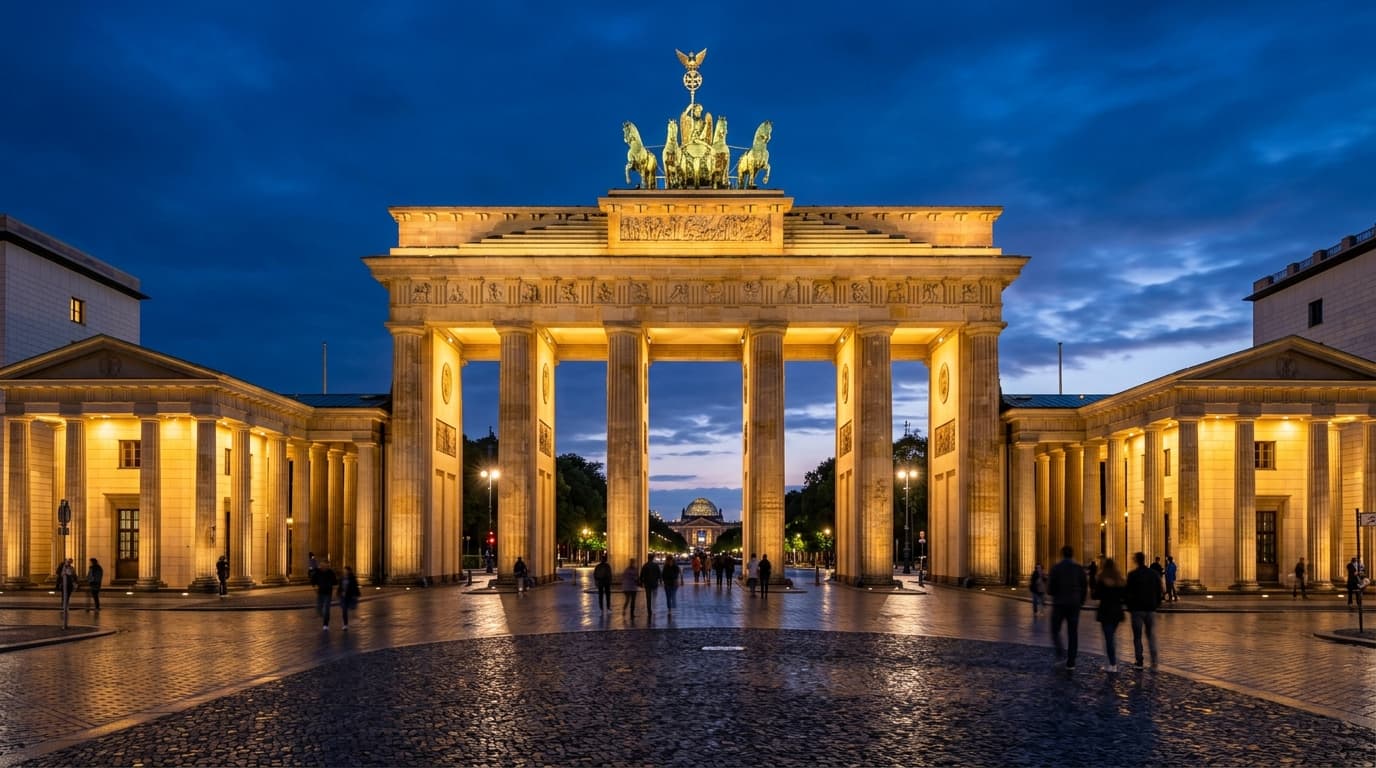
Commissioned by King Frederick William II of Prussia and designed by architect Carl Gotthard Langhans between 1788 and 1791, the Brandenburg Gate has stood witness to the defining chapters of modern European history: from Napoleon's triumphal march to Cold War division as an inaccessible symbol sealed within the Berlin Wall's death strip.
Since the fall of the Wall in 1989, Pariser Platz has been painstakingly reconstructed with diplomatic embassies and civic plazas. The newly completed enhancement project introduces expanded granite paving, subterranean acoustic dampening along the U-Bahn line beneath the plaza, and an eco-friendly architectural lighting scheme utilizing warm-spectrum low-energy LEDs that illuminate the iconic bronze Quadriga statue without contributing to urban light pollution.
"The Brandenburg Gate belongs to the citizens of the world," stated Berlin Senator for Urban Development Christian Gaebler. "This unified boulevard allows travelers to walk seamlessly through three centuries of German history, from Prussian classical enlightenment to our vibrant democratic present."
The Unter den Linden Promenade and Museum Island Nexus
Visitors strolling eastward from the Gate along the broad, tree-lined Unter den Linden boulevard now enjoy uninterrupted walking access past the German Historical Museum, Bebelplatz (site of the underground library monument by Micha Ullman), and the neoclassical State Opera.
At the eastern terminus, the newly connected James-Simon-Galerie serves as the central reception pavilion for Museum Island, allowing seamless underground passage between the Pergamon Museum, Neues Museum (home to the iconic Bust of Nefertiti), Altes Museum, and Alte Nationalgalerie.
Essential Travel Wire & Touring Tips
To experience Berlin's historic corridor to its fullest potential, consider the following recommendations:
- Room of Silence (Raum der Stille): Located inside the northern wing of the Brandenburg Gate, this tranquil meditative chamber offers visitors a peaceful respite from the bustling city.
- Reichstag Dome Proximity: The German Bundestag (Reichstag building) with its famous Norman Foster glass dome is just a 3-minute walk north of the Gate; advance registration on the official parliamentary portal is mandatory.
- Photography Tips: Pariser Platz faces east, making dawn and early morning the ideal time to photograph the Gate illuminated by golden sunrise without crowds.
- Public Transit: The dedicated "Brandeburger Tor" station connects directly via S-Bahn (S1, S2, S25, S26) and U-Bahn (U5), providing rapid access from Berlin Central Station (Hauptbahnhof).
As Berlin continues to inspire global travelers, the Brandenburg Gate stands as a shining beacon of peace, resilience, and architectural grandeur.
Architectural Significance & Historical Lineage
Understanding the broader context of this landmark requires examining its profound historical and civic lineage. From initial structural masterplans to contemporary conservation methodologies, the site reflects generations of visionary engineering ambition and material mastery. International architectural critics frequently cite its distinctive spatial organization as a pivotal benchmark in global heritage design, illustrating how historic integrity can successfully adapt to 21st-century environmental, technological, and operational demands.
Specialized conservation teams continuously monitor structural tolerances using non-invasive laser telemetry, micro-environmental sensors, and advanced material analysis. These ongoing technical investments ensure that the landmark remains completely resilient against climate fluctuations, heavy visitor footfall, and urban atmospheric conditions while preserving its authentic historic fabric.
Sustainability, Transit Connectivity & Neighborhood Context
In accordance with global sustainable tourism charters, local municipal authorities have integrated the attraction into wider pedestrianized zones and low-emission transit networks. Travelers are encouraged to utilize high-frequency public transportation links, electric shared mobility corridors, and scenic walking boulevards that connect the monument directly to nearby cultural quarters, independent artisan boutiques, and regional culinary establishments.
The surrounding district offers travelers an array of authentic cultural encounters within easy walking distance. Exploring the adjacent historic streets reveals hidden courtyards, neighborhood bistros, and specialized heritage bookshops that provide deeper insight into the local community's enduring relationship with its world-famous landmark.
WAT Editorial Bureau Takeaway & Travel Outlook
As international travel demand continues to set new benchmarks, this milestone development reinforces the destination's position at the vanguard of cultural stewardship and immersive visitor experience. Whether embarking on a first-time architectural pilgrimage or returning for an in-depth rediscovery, travelers who plan ahead with verified time-slot reservations and respectful cultural awareness will find an encounter of unmatched majesty and inspiration.