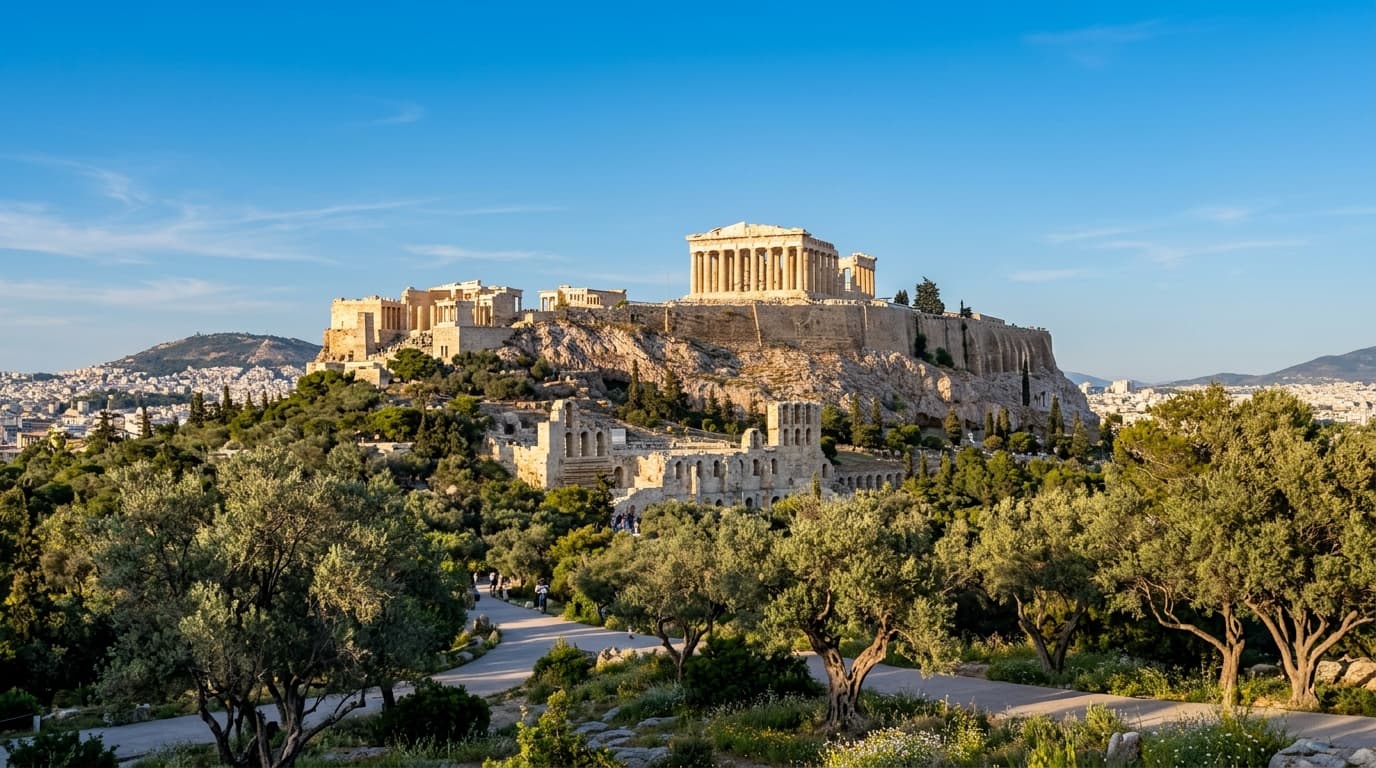
Perched high above the Greek capital upon its iconic limestone outcrop, the Acropolis of Athens—the quintessential symbol of classical civilization, democracy, and ancient architectural mastery—has implemented a groundbreaking sustainable visitor management system. The Greek Ministry of Culture has finalized hourly capacity limits and completed an extensive restoration of the western monumental approach leading to the ancient Propylaea gates.
Balancing Heritage Conservation with Global Demand
With annual visitation surpassing three million travelers, the fragile marble ruins of the Parthenon, the Erechtheion, and the Temple of Athena Nike were facing severe bottlenecking at the central archaeological entrance. Under the new digital dynamic management model, daily capacity is capped at 20,000 visitors distributed across hourly time-slots from 8:00 AM to 8:00 PM.
Additionally, the controversial temporary concrete walkways installed during pandemic-era accessibility overhauls have been replaced with natural porous limestone paving that matches the geological composition of the Sacred Rock. These widened pathways allow smooth, slip-resistant circulation for wheelchair users and multi-generational travelers while allowing rainwater to naturally drain through historic subterranean channels.
"The Acropolis is a universal monument that belongs to all humanity," stated Greek Minister of Culture Lina Mendoni. "Our responsibility is two-fold: guaranteeing that every guest experiences the spiritual majesty of classical Athens in safety, while preventing the physical degradation of these 2,500-year-old Pentelic marble masterpieces."
Parthenon Restoration and the Acropolis Museum Connection
On the summit plateau, the Committee for the Conservation of the Acropolis Monuments (ESMA) continues its world-renowned restoration of the Parthenon's west pediment and cella walls. Using titanium dowels and precision-quarried Pentelic marble from the same Mount Pentelicus quarries used by classical architect Ictinus and sculptor Phidias in 447 BC, restorers are correcting centuries of structural shifts caused by 17th-century explosions and early 20th-century iron rod oxidization.
Visitors are encouraged to pair their ascent with an exploration of the neighboring Acropolis Museum, located 300 meters south. Designed by Bernard Tschumi, the museum's glass-floored galleries exhibit the original Caryatids, the Parthenon frieze casts, and artifacts discovered across the slopes of Dionysus.
Practical Tour Planning & Visitor Advice
To optimize your ascent to classical Athens' greatest architectural marvel:
- Strict Time-Slot Adherence: Entry is valid strictly within a 15-minute grace period before and after your booked hourly window; late arrivals risk forfeiture without refund.
- South Slope Alternative Entrance: Enter via the South Slope entrance near the Dionysiou Areopagitou pedestrian promenade (near the Acropolis metro station) rather than the main western gate to experience the ancient Theatre of Dionysus with shorter queues.
- Hydration & Footwear: The ancient marble steps are polished and extremely slippery; wear sturdy rubber-soled walking shoes and bring refillable water bottles (free filtered water stations are available at the summit).
- Early Morning Advantage: The 8:00 AM to 9:00 AM slot offers cool temperatures, tranquil photo conditions, and the opportunity to witness the Hellenic Presidential Guard raising the Greek flag at the Belvedere lookout.
Standing before the monumental Doric columns of the Parthenon remains an unforgettable pilgrimage into the dawn of Western philosophy, art, and democratic architecture.
Architectural Significance & Historical Lineage
Understanding the broader context of this landmark requires examining its profound historical and civic lineage. From initial structural masterplans to contemporary conservation methodologies, the site reflects generations of visionary engineering ambition and material mastery. International architectural critics frequently cite its distinctive spatial organization as a pivotal benchmark in global heritage design, illustrating how historic integrity can successfully adapt to 21st-century environmental, technological, and operational demands.
Specialized conservation teams continuously monitor structural tolerances using non-invasive laser telemetry, micro-environmental sensors, and advanced material analysis. These ongoing technical investments ensure that the landmark remains completely resilient against climate fluctuations, heavy visitor footfall, and urban atmospheric conditions while preserving its authentic historic fabric.
Sustainability, Transit Connectivity & Neighborhood Context
In accordance with global sustainable tourism charters, local municipal authorities have integrated the attraction into wider pedestrianized zones and low-emission transit networks. Travelers are encouraged to utilize high-frequency public transportation links, electric shared mobility corridors, and scenic walking boulevards that connect the monument directly to nearby cultural quarters, independent artisan boutiques, and regional culinary establishments.
The surrounding district offers travelers an array of authentic cultural encounters within easy walking distance. Exploring the adjacent historic streets reveals hidden courtyards, neighborhood bistros, and specialized heritage bookshops that provide deeper insight into the local community's enduring relationship with its world-famous landmark.
WAT Editorial Bureau Takeaway & Travel Outlook
As international travel demand continues to set new benchmarks, this milestone development reinforces the destination's position at the vanguard of cultural stewardship and immersive visitor experience. Whether embarking on a first-time architectural pilgrimage or returning for an in-depth rediscovery, travelers who plan ahead with verified time-slot reservations and respectful cultural awareness will find an encounter of unmatched majesty and inspiration.