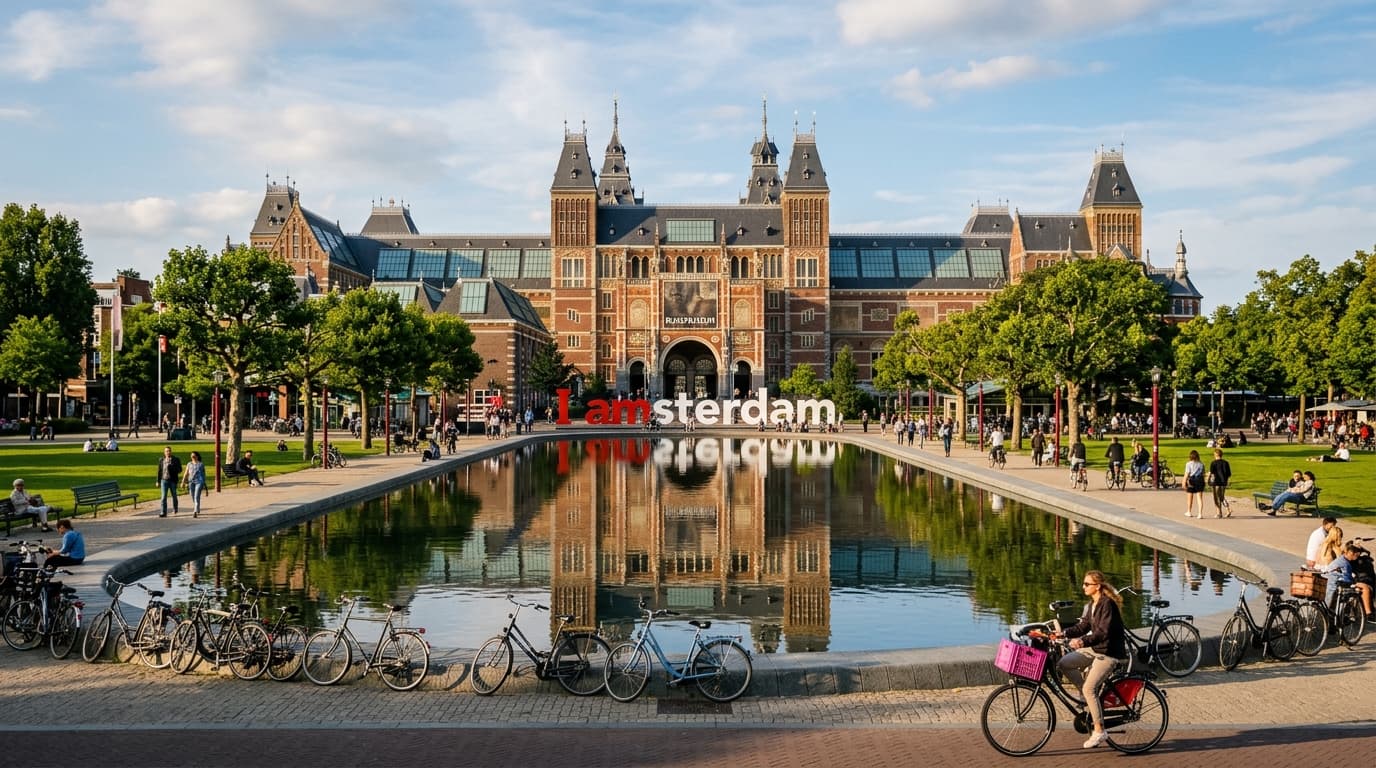
Located on Amsterdam's prestigious Museumplein, the Rijksmuseum—the national museum of the Netherlands—has inaugurated a state-of-the-art re-curation of its celebrated Gallery of Honour. The project seamlessly integrates centuries-old masterworks by Rembrandt van Rijn, Johannes Vermeer, and Frans Hals with pioneering non-invasive digital imaging technologies that reveal the hidden brushstrokes of Dutch Golden Age painting.
Operation Night Watch: Science Meets Masterpiece
At the physical and spiritual heart of the museum hangs Rembrandt's monumental 1642 canvas, The Night Watch. Enclosed within a custom-built ultra-clear glass chamber, the painting remains on public view while an international consortium of conservators and data scientists conducts the most extensive research and conservation project in the artwork's history, known as "Operation Night Watch."
Utilizing macro-X-ray fluorescence scanners, high-resolution 717-gigapixel photography, and artificial intelligence neural networks, researchers have reconstructed long-lost trimmed sections of the canvas and mapped microscopic pigment layers. Visitors can watch conservators actively working in real-time while accessing interactive touch-panels outside the glass chamber to explore microscopic details of Rembrandt's revolutionary impasto technique.
"The Rijksmuseum is not merely a custodian of static historical artifacts; it is a vibrant laboratory of cultural discovery," said General Director Taco Dibbits. "By making scientific research visible to millions of guests, we invite the world into the creative mind of Rembrandt."
Vermeer Intimacy and the Great Hall Revitalization
Adjacent to the Gallery of Honour, the museum's collection of rare Vermeer masterpieces—including The Milkmaid, The Little Street, and Woman in Blue Reading a Letter—has been reinstalled in dedicated acoustically dampened viewing rooms. Custom directional lighting highlights the subtle optical realism, delicate pearl glazes, and luminous daylight for which the Delft master is revered.
The museum's Cuypers Library, the largest and oldest art history library in the Netherlands, has also expanded visitor viewing balconies, allowing readers and art lovers to admire its soaring four-story wrought-iron spiral staircases and hand-bound 19th-century manuscript folios.
Visitor Logistics & Seamless Museumplein Experience
To ensure a tranquil and enriching visit, the Rijksmuseum enforces a strict timed-entry protocol:
- Mandatory Start-Time Slots: Every visitor, including Museumkaart holders and City Card pass holders, must reserve a specific start-time slot online prior to arrival.
- The Rijksmuseum App: Download the official multimedia tour app to access free curated audio guides narrated in 11 languages, offering specialized routes ranging from 45-minute highlights to 3-hour deep architectural explorations.
- Optimal Visiting Hours: Early morning slots (9:00 AM to 10:30 AM) and late afternoon slots (after 3:30 PM) offer the most serene gallery experiences with fewer tour groups.
- Museumplein Connectivity: Combine your visit with the neighboring Van Gogh Museum and Stedelijk Museum, all within a 3-minute walk across the landscaped Museumplein park.
Through its masterful fusion of artistic heritage and modern scholarship, the Rijksmuseum continues to set the global benchmark for museum excellence.
Architectural Significance & Historical Lineage
Understanding the broader context of this landmark requires examining its profound historical and civic lineage. From initial structural masterplans to contemporary conservation methodologies, the site reflects generations of visionary engineering ambition and material mastery. International architectural critics frequently cite its distinctive spatial organization as a pivotal benchmark in global heritage design, illustrating how historic integrity can successfully adapt to 21st-century environmental, technological, and operational demands.
Specialized conservation teams continuously monitor structural tolerances using non-invasive laser telemetry, micro-environmental sensors, and advanced material analysis. These ongoing technical investments ensure that the landmark remains completely resilient against climate fluctuations, heavy visitor footfall, and urban atmospheric conditions while preserving its authentic historic fabric.
Sustainability, Transit Connectivity & Neighborhood Context
In accordance with global sustainable tourism charters, local municipal authorities have integrated the attraction into wider pedestrianized zones and low-emission transit networks. Travelers are encouraged to utilize high-frequency public transportation links, electric shared mobility corridors, and scenic walking boulevards that connect the monument directly to nearby cultural quarters, independent artisan boutiques, and regional culinary establishments.
The surrounding district offers travelers an array of authentic cultural encounters within easy walking distance. Exploring the adjacent historic streets reveals hidden courtyards, neighborhood bistros, and specialized heritage bookshops that provide deeper insight into the local community's enduring relationship with its world-famous landmark.
WAT Editorial Bureau Takeaway & Travel Outlook
As international travel demand continues to set new benchmarks, this milestone development reinforces the destination's position at the vanguard of cultural stewardship and immersive visitor experience. Whether embarking on a first-time architectural pilgrimage or returning for an in-depth rediscovery, travelers who plan ahead with verified time-slot reservations and respectful cultural awareness will find an encounter of unmatched majesty and inspiration.