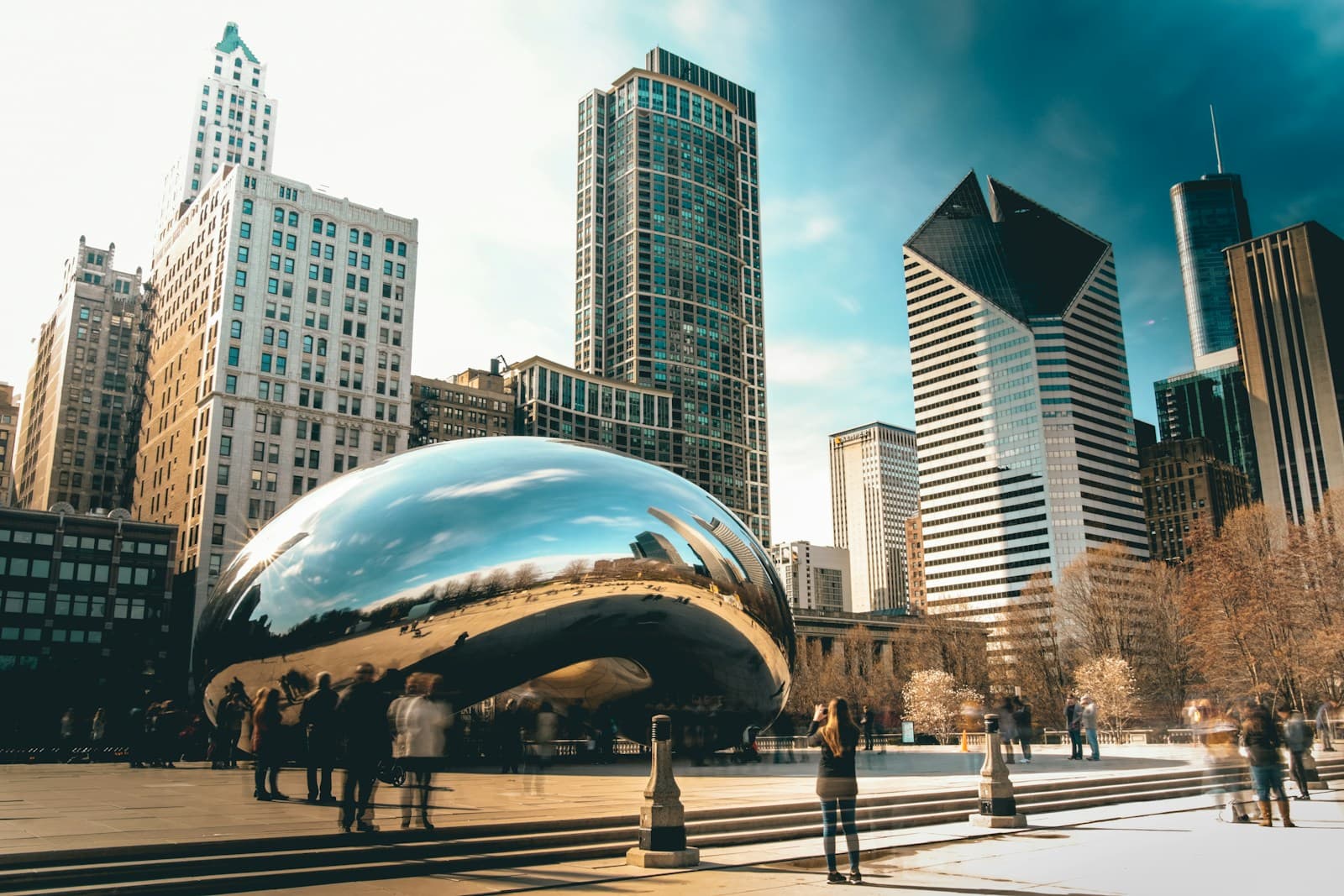
Reflecting the towering architectural canyon of Michigan Avenue and the expansive skies over Lake Michigan, Sir Anish Kapoor's monumental 110-ton seamless stainless-steel sculpture, Cloud Gate (affectionately known worldwide as "The Bean"), has officially reopened its surrounding Grainger Plaza in Chicago's Millennium Park following extensive waterproofing, paving, and accessibility upgrades.
A Masterpiece of Precision Architectural Engineering
Constructed between 2004 and 2006, Cloud Gate is composed of 168 individual stainless-steel plates welded together with zero visible exterior seams, polished to an extraordinary mirror finish. The sculpture's 12-foot-high central omphalos (underside concave chamber) allows visitors to walk beneath the structure and witness dizzying, kaleidoscopic reflections of themselves and the surrounding urban skyline.
The Department of Cultural Affairs and Special Events (DCASE) has completed a multi-million-dollar restoration of Grainger Plaza, replacing worn granite pavers, updating subterranean drainage to prevent winter freeze-thaw damage, and adding integrated ADA-accessible ramps that ensure all visitors can reach the base of the sculpture comfortably.
"Cloud Gate is the civic living room of Chicago," stated Chicago Mayor Brandon Johnson during the reopening celebration. "It is where residents celebrate, where millions of global travelers take their first Chicago photographs, and where world-class public art belongs freely to everyone."
Millennium Park's Cultural Crown Jewels
Surrounding Cloud Gate, the 24.5-acre Millennium Park offers a world-renowned ensemble of contemporary art and landscape architecture:
- Jay Pritzker Pavilion: Designed by Pritzker Prize-winning architect Frank Gehry, featuring sweeping stainless-steel ribbons and a revolutionary overhead trellis sound system that mimics indoor concert hall acoustics across the Great Lawn during the free Summer Music Festival.
- Crown Fountain: Spanish artist Jaume Plensa's interactive 50-foot glass block LED towers projecting video portraits of Chicago citizens, spouting cascading water onto a shallow black granite reflecting pool.
- Lurie Garden: A 5-acre urban botanical oasis designed by Piet Oudolf, featuring perennial wildflower borders, historic hedge hedges, and tranquil wooden boardwalks over a running water canal.
Visitor Planning & Architecture River Cruises
To experience Chicago's world-class architecture and public art:
- Free Admission: Millennium Park and Cloud Gate are completely free and open daily from 6:00 AM to 11:00 PM.
- Morning Reflections: Visit early in the morning (6:00 AM to 8:00 AM) to capture pristine, crowd-free reflections of the sunrise bouncing off the eastern curve of the sculpture.
- Architecture Cruise Pairing: Walk two blocks north to the Chicago Riverwalk to board the official Chicago Architecture Center (CAC) River Cruise aboard First Lady Cruises, universally hailed as the premier architectural boat tour in North America.
- Art Institute Proximity: Cross the Renzo Piano-designed Nichols Bridgeway directly from Millennium Park into the Modern Wing of the Art Institute of Chicago.
With its gleaming surface once again reflecting the vibrancy of the Windy City, Cloud Gate stands as a shining icon of modern urban art and architectural civic pride.
Architectural Significance & Historical Lineage
Understanding the broader context of this landmark requires examining its profound historical and civic lineage. From initial structural masterplans to contemporary conservation methodologies, the site reflects generations of visionary engineering ambition and material mastery. International architectural critics frequently cite its distinctive spatial organization as a pivotal benchmark in global heritage design, illustrating how historic integrity can successfully adapt to 21st-century environmental, technological, and operational demands.
Specialized conservation teams continuously monitor structural tolerances using non-invasive laser telemetry, micro-environmental sensors, and advanced material analysis. These ongoing technical investments ensure that the landmark remains completely resilient against climate fluctuations, heavy visitor footfall, and urban atmospheric conditions while preserving its authentic historic fabric.
Sustainability, Transit Connectivity & Neighborhood Context
In accordance with global sustainable tourism charters, local municipal authorities have integrated the attraction into wider pedestrianized zones and low-emission transit networks. Travelers are encouraged to utilize high-frequency public transportation links, electric shared mobility corridors, and scenic walking boulevards that connect the monument directly to nearby cultural quarters, independent artisan boutiques, and regional culinary establishments.
The surrounding district offers travelers an array of authentic cultural encounters within easy walking distance. Exploring the adjacent historic streets reveals hidden courtyards, neighborhood bistros, and specialized heritage bookshops that provide deeper insight into the local community's enduring relationship with its world-famous landmark.
WAT Editorial Bureau Takeaway & Travel Outlook
As international travel demand continues to set new benchmarks, this milestone development reinforces the destination's position at the vanguard of cultural stewardship and immersive visitor experience. Whether embarking on a first-time architectural pilgrimage or returning for an in-depth rediscovery, travelers who plan ahead with verified time-slot reservations and respectful cultural awareness will find an encounter of unmatched majesty and inspiration.