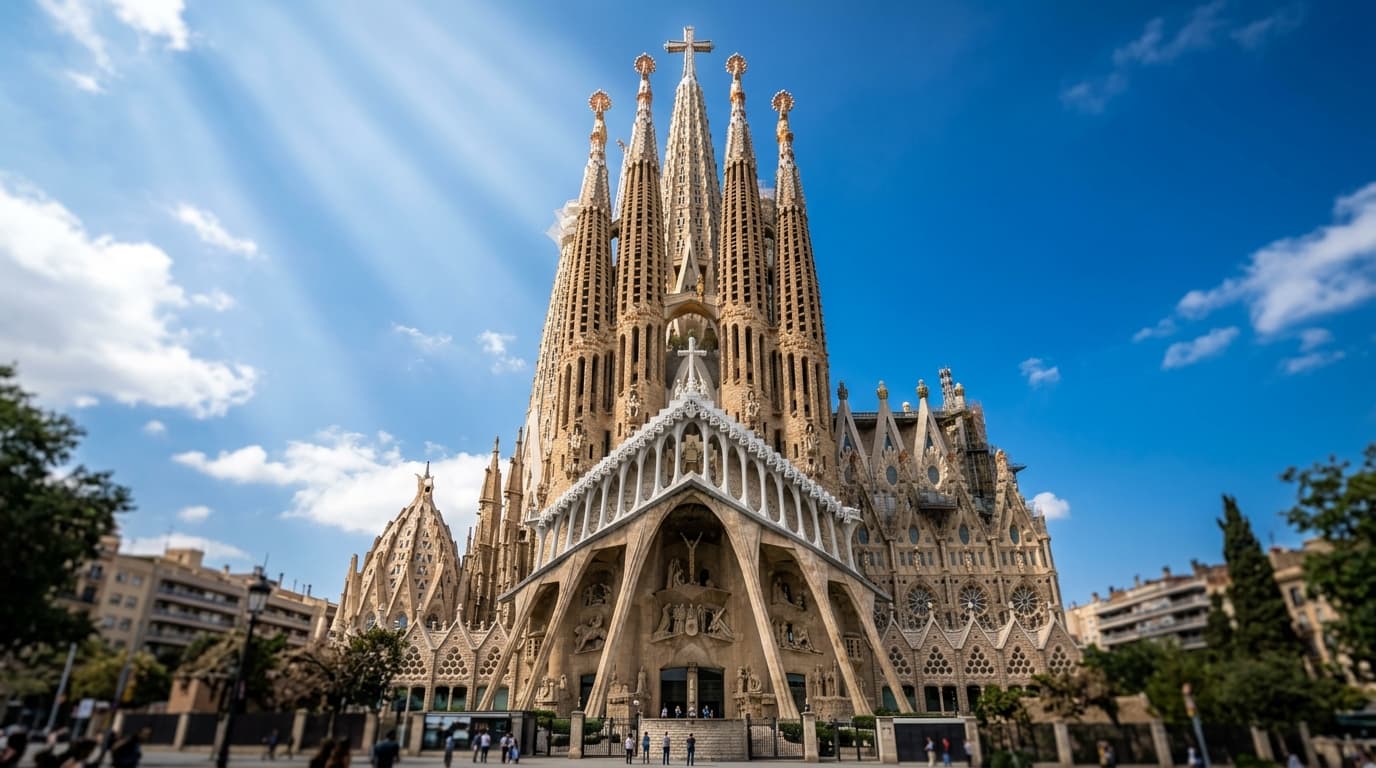
More than 140 years after the laying of its cornerstone in 1882, the Basílica de la Sagrada Família in Barcelona has entered its definitive construction phase. The Temple Expiatori foundation has officially announced the structural milestone completion of the Chapel of the Assumption on Carrer de Provença, while assembly of the towering 172.5-meter central spire—the Tower of Jesus Christ—approaches its crowning architectural apex.
Gaudí's Vision Realized Through 21st-Century Engineering
When Catalan master Antoni Gaudí died in 1926, only a fraction of the basilica—including the Nativity façade and crypt—was completed. Gaudí, aware that the monumental temple would take generations to finish, left behind intricate plaster models and geometrical principles based on natural forms: hyperboloids, paraboloids, and branching forest-like columns.
Today, a specialized international team of architects, stone masons, and aeronautical structural engineers uses 3D parametric computer modeling and precision-cut tensioned stone blocks assembled off-site in Galician quarries. This hybrid methodology preserves Gaudí's exact organic geometries while adhering to modern seismic and structural safety standards.
"We are witnessing the culmination of one of the longest continuous artistic and architectural journeys in human history," remarked Chief Architect Jordi Faulí. "When the four-armed cross is hoisted atop the Tower of Jesus Christ, the silhouette of Barcelona will be forever defined by Gaudí's spiritual elevation."
Stained-Glass Symphony and Interior Nave Experience
While exterior cranes command attention from the street, the interior nave of the basilica stands as a completed masterwork of light and acoustic harmony. Stained-glass artist Joan Vila-Grau's vibrant windows bathe the interior columns in cool blues and greens on the east (sunrise) side, transitioning to radiant fiery ambers, oranges, and deep reds on the west (sunset) side.
The resulting illumination transforms the 45-meter-high vaulted ceiling into a living canopy of stone, mimicking sunlight filtering through a Mediterranean forest canopy. Regular choral recitals and organ concerts showcase the basilica's newly integrated acoustic baffle system, drawing musicologists from across the globe.
Practical Visitor Intelligence & Tower Access
Due to intense global interest, visiting the Sagrada Família requires advance logistical preparation:
- Strict Advance Booking: Same-day ticket desks have been permanently eliminated; all tickets must be purchased through the official app or website well in advance.
- Tower Selection: Visitors can choose to ascend either the Nativity Tower (featuring Gaudí's direct stonework and panoramic views of eastern Barcelona and the sea) or the Passion Tower (facing the city center and Montjuïc). Both require descending via narrow spiral staircases.
- Dress Code Compliance: As a consecrated Catholic basilica, respectful attire is strictly enforced: shoulders must be covered, and shorts or skirts must reach at least mid-thigh.
- Morning vs. Afternoon Light: Book morning slots for ethereal cool lighting on the Nativity side; choose late afternoon slots (after 4:00 PM) for dramatic golden hour brilliance across the nave.
As the final spires near completion, the Sagrada Família stands as an unmatched testament to human perseverance, artistic devotion, and visionary structural architecture.
Architectural Significance & Historical Lineage
Understanding the broader context of this landmark requires examining its profound historical and civic lineage. From initial structural masterplans to contemporary conservation methodologies, the site reflects generations of visionary engineering ambition and material mastery. International architectural critics frequently cite its distinctive spatial organization as a pivotal benchmark in global heritage design, illustrating how historic integrity can successfully adapt to 21st-century environmental, technological, and operational demands.
Specialized conservation teams continuously monitor structural tolerances using non-invasive laser telemetry, micro-environmental sensors, and advanced material analysis. These ongoing technical investments ensure that the landmark remains completely resilient against climate fluctuations, heavy visitor footfall, and urban atmospheric conditions while preserving its authentic historic fabric.
Sustainability, Transit Connectivity & Neighborhood Context
In accordance with global sustainable tourism charters, local municipal authorities have integrated the attraction into wider pedestrianized zones and low-emission transit networks. Travelers are encouraged to utilize high-frequency public transportation links, electric shared mobility corridors, and scenic walking boulevards that connect the monument directly to nearby cultural quarters, independent artisan boutiques, and regional culinary establishments.
The surrounding district offers travelers an array of authentic cultural encounters within easy walking distance. Exploring the adjacent historic streets reveals hidden courtyards, neighborhood bistros, and specialized heritage bookshops that provide deeper insight into the local community's enduring relationship with its world-famous landmark.
WAT Editorial Bureau Takeaway & Travel Outlook
As international travel demand continues to set new benchmarks, this milestone development reinforces the destination's position at the vanguard of cultural stewardship and immersive visitor experience. Whether embarking on a first-time architectural pilgrimage or returning for an in-depth rediscovery, travelers who plan ahead with verified time-slot reservations and respectful cultural awareness will find an encounter of unmatched majesty and inspiration.