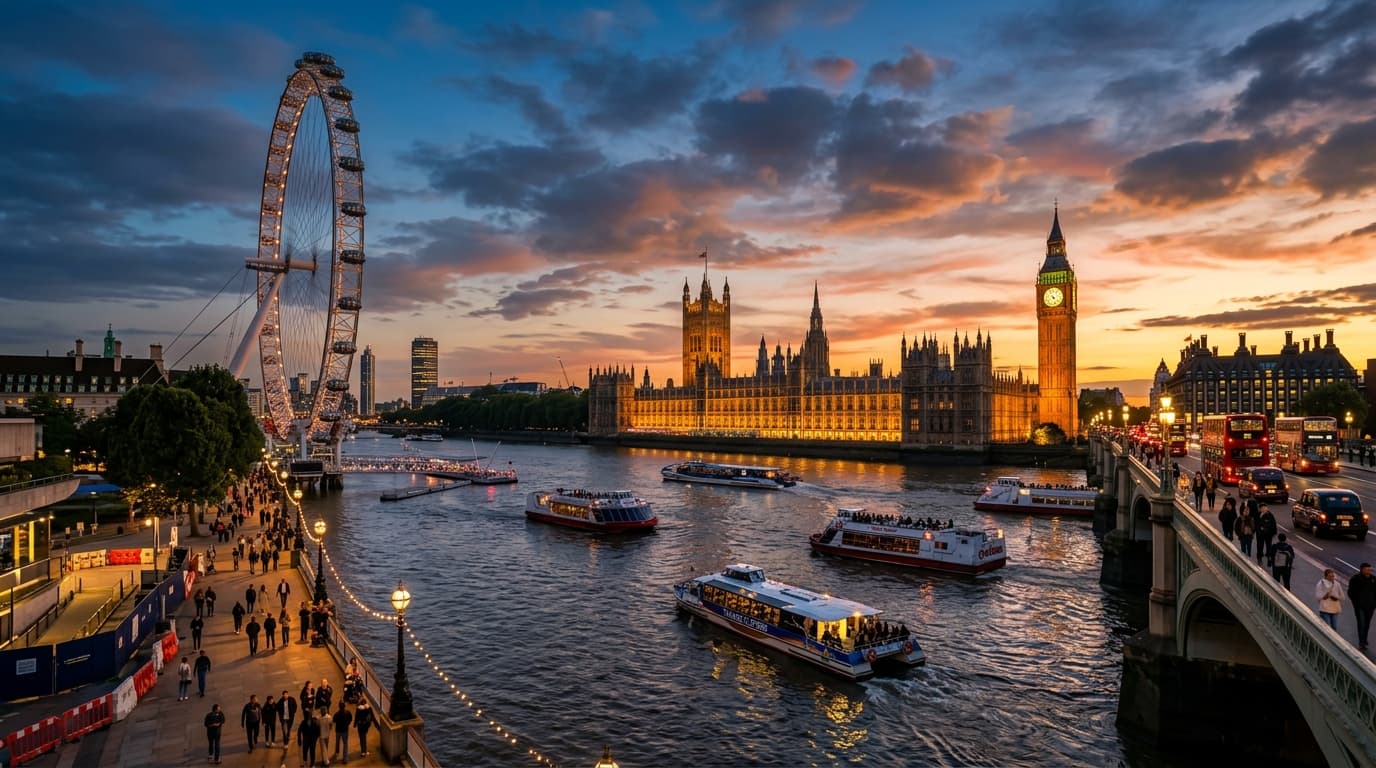
Since its grand millennium debut on the South Bank of the River Thames, the London Eye has transformed from what was originally conceived as a temporary five-year architectural celebration into the defining silhouette of modern London's skyline. As the world-famous cantilevered observation wheel marks a quarter-century of continuous operation, operator Merlin Entertainments has unveiled a comprehensive suite of guest-facing technological upgrades across all 32 glass capsules.
Next-Generation Immersive Flight Experience
Each of the structure's 10-ton ovoid passenger capsules has undergone a meticulous interior refit. The pods are now equipped with ultra-responsive 4K panoramic touchscreens that offer real-time contextual augmented reality overlays. As the wheel slowly completes its 30-minute revolution, guests can tap on historic landmarks across the horizon—from St. Paul's Cathedral and The Shard to Buckingham Palace and Windsor Castle—to reveal historical archives, architectural blueprints, and 3D time-lapse visualizations.
Enhanced climate control systems have also been installed, maintaining an optimal 21°C interior atmosphere regardless of exterior British weather conditions, while newly engineered acoustic glass dampens exterior city noise to create a serene floating observatory high above the bustling Thames.
"The London Eye represents a masterclass in modern structural engineering and civic placemaking," noted Senior UK Tourism Analyst Marcus Hilliard. "After twenty-five years and more than 85 million passengers, these digital enhancements ensure the flight remains just as awe-inspiring for first-time visitors as it was in the year 2000."
Integrated River Cruise and Twilight Combinations
To provide a multi-dimensional perspective of the capital, the London Eye has expanded its dual-ticket packages to include the London Eye River Cruise. Operating directly from the Waterloo Millennium Pier at the base of the wheel, the 40-minute guided catamaran tour glides past Shakespeare's Globe, Tower Bridge, and the Tower of London, offering expert live commentary from accredited Blue Badge guides.
Special "Twilight Flights" scheduled during the transition from golden sunset to illuminated evening have become the premier attraction for photography enthusiasts. As the city lights flicker to life along Westminster Bridge and the Palace of Westminster, the observation wheel's exterior RGB LED lighting system cycles through synchronized ambient displays reflecting national celebrations and seasonal festivities.
Visitor Logistics and Strategic Planning
For travelers planning a London itinerary, the following insider recommendations will maximize time and value:
- Fast Track Upgrade: Purchasing a Fast Track ticket bypasses the primary boarding queue, reducing standard wait times from 45 minutes to under 15 minutes during peak midday windows.
- Optimal Flight Times: Schedule flights approximately 30 minutes before official sunset to witness the capital in daylight, dusk, and sparkling night illumination within a single rotation.
- Weather Contingency: Tickets booked directly through official channels offer flexible date-change policies in the event of persistent heavy fog or torrential rain.
- Location Connectivity: The attraction is easily accessible via a 5-minute walk from Waterloo Station (Bakerloo, Northern, Jubilee, and National Rail lines) or across the pedestrianized Golden Jubilee Bridges from Charing Cross.
As London continues to evolve as a global cultural powerhouse, the London Eye stands as an enduring testament to visionary design and extraordinary urban perspective.
Architectural Significance & Historical Lineage
Understanding the broader context of this landmark requires examining its profound historical and civic lineage. From initial structural masterplans to contemporary conservation methodologies, the site reflects generations of visionary engineering ambition and material mastery. International architectural critics frequently cite its distinctive spatial organization as a pivotal benchmark in global heritage design, illustrating how historic integrity can successfully adapt to 21st-century environmental, technological, and operational demands.
Specialized conservation teams continuously monitor structural tolerances using non-invasive laser telemetry, micro-environmental sensors, and advanced material analysis. These ongoing technical investments ensure that the landmark remains completely resilient against climate fluctuations, heavy visitor footfall, and urban atmospheric conditions while preserving its authentic historic fabric.
Sustainability, Transit Connectivity & Neighborhood Context
In accordance with global sustainable tourism charters, local municipal authorities have integrated the attraction into wider pedestrianized zones and low-emission transit networks. Travelers are encouraged to utilize high-frequency public transportation links, electric shared mobility corridors, and scenic walking boulevards that connect the monument directly to nearby cultural quarters, independent artisan boutiques, and regional culinary establishments.
The surrounding district offers travelers an array of authentic cultural encounters within easy walking distance. Exploring the adjacent historic streets reveals hidden courtyards, neighborhood bistros, and specialized heritage bookshops that provide deeper insight into the local community's enduring relationship with its world-famous landmark.
WAT Editorial Bureau Takeaway & Travel Outlook
As international travel demand continues to set new benchmarks, this milestone development reinforces the destination's position at the vanguard of cultural stewardship and immersive visitor experience. Whether embarking on a first-time architectural pilgrimage or returning for an in-depth rediscovery, travelers who plan ahead with verified time-slot reservations and respectful cultural awareness will find an encounter of unmatched majesty and inspiration.